
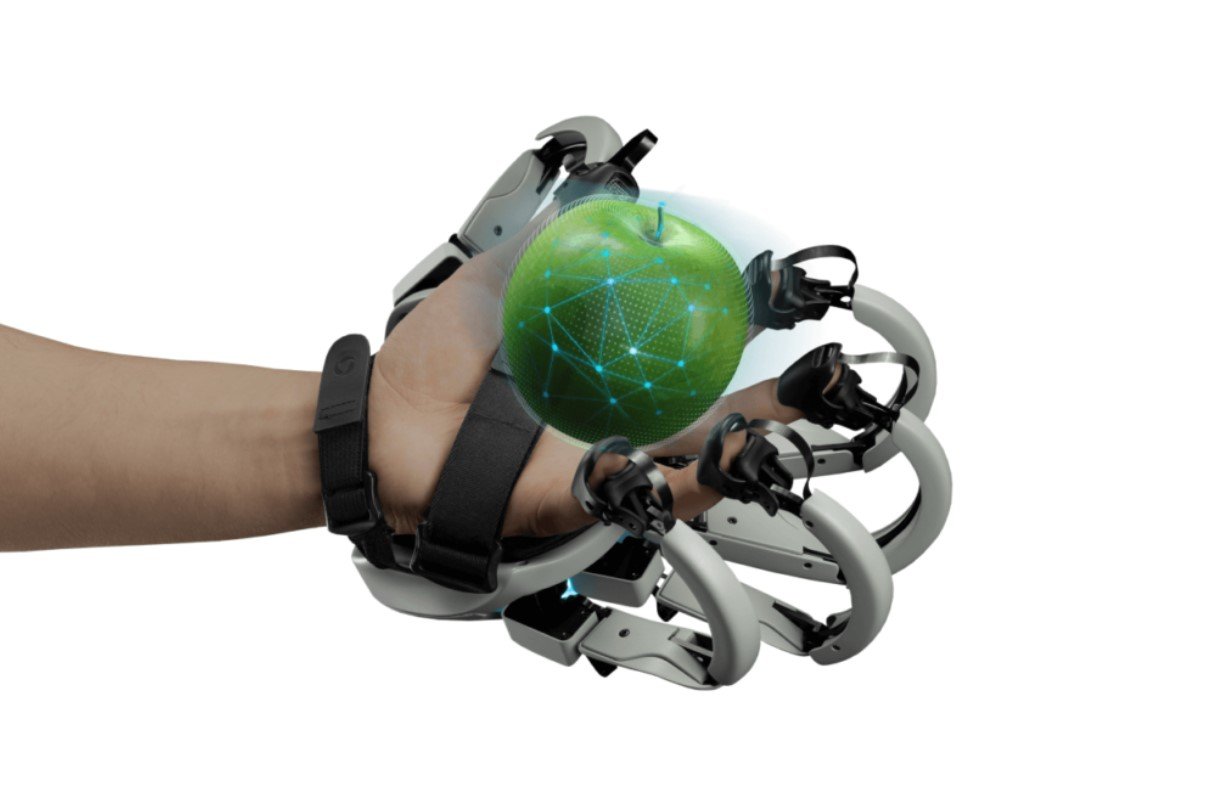
Modern machines are no longer limited to seeing and calculating. Increasingly, they are expected to feel. From surgical robots handling fragile tissue to precision manipulators assembling micro-components, the ability to sense touch and respond with controlled force has become critical. Haptic feedback control lies at the centre of this capability. It enables machines to interact with the physical world in a nuanced, human-like manner, translating forces, vibrations, and resistance into actionable control signals. As robotics and intelligent systems advance, haptic feedback is emerging as a key technology for safe, precise, and adaptive interaction.
Fundamentals of Haptic Feedback Control Systems
Haptic feedback control systems are built on the integration of sensing, control logic, and actuation. At the sensing layer, force sensors, torque sensors, and tactile arrays capture physical interaction data such as pressure, resistance, or surface texture. These signals provide real-time information about how the system is interacting with its environment.
The control layer processes this information and determines how the system should respond. Controllers are designed to regulate force, position, or impedance depending on the task. For example, when a robotic tool encounters unexpected resistance, the controller adjusts motion or applied force to prevent damage. Actuators then execute these decisions by modifying movement or pressure.
The challenge lies in achieving stability and responsiveness simultaneously. Delayed or noisy feedback can lead to oscillations or unsafe behaviour. Designing robust control algorithms that handle uncertainty while maintaining smooth interaction is a central focus of haptic control research.
Role of Haptics in Surgical and Medical Robotics
One of the most impactful applications of haptic feedback control is in surgical robotics. In minimally invasive procedures, surgeons operate through robotic interfaces without directly touching tissue. Haptic feedback restores the sense of touch by conveying forces back to the surgeon’s hands, allowing precise manipulation while reducing fatigue and error.
Force-sensing instruments detect tissue resistance, while controllers regulate tool motion to prevent excessive pressure. This capability is particularly important when operating near delicate structures such as nerves or blood vessels. Without haptic feedback, surgeons must rely solely on visual cues, which can be limiting in complex procedures.
Advances in intelligent control and machine learning are further enhancing these systems. Adaptive controllers can learn tissue properties and adjust responses dynamically. Professionals exploring intelligent robotics and control systems often encounter these concepts when studying advanced topics through an ai course in chennai, where haptics is increasingly discussed as part of embodied intelligence.
Control Strategies for Delicate Environmental Interaction
Different interaction scenarios require different haptic control strategies. Force control focuses on maintaining a desired contact force, making it suitable for tasks like polishing or tissue manipulation. Position control prioritises accurate movement, while impedance control blends both by defining how the system should respond to external forces.
Impedance and admittance control are widely used in haptic systems because they allow compliant behaviour. Instead of rigidly resisting external forces, the system behaves like a virtual spring or damper. This compliance improves safety and realism, especially in human-machine interaction.
Modern controllers also incorporate predictive models and sensor fusion. By combining force data with vision or motion sensing, systems can anticipate contact events and adjust behaviour proactively. These techniques reduce latency and improve stability, enabling smoother and more natural interaction with complex environments.
Challenges in Real-World Haptic System Design
Despite their potential, haptic feedback systems face several practical challenges. Sensor noise, limited bandwidth, and communication delays can degrade performance. In remote or teleoperated systems, network latency can disrupt the feedback loop, making stable control difficult.
Another challenge is scalability. High-resolution tactile sensing generates large volumes of data, which must be processed in real time. Efficient algorithms and hardware acceleration are often required to meet these demands.
Safety certification is also critical, particularly in medical and industrial applications. Controllers must be thoroughly validated to ensure predictable behaviour under all operating conditions. Addressing these challenges requires interdisciplinary expertise spanning control theory, robotics, and artificial intelligence, areas often combined in specialised learning paths such as an ai course in chennai.
Broader Applications Beyond Robotics
While surgical robots are a prominent example, haptic feedback control has broader applications. In virtual and augmented reality, haptics enhances immersion by providing realistic touch sensations. In industrial automation, force-controlled robots handle fragile materials without damage. Rehabilitation devices use haptic feedback to guide patients through therapeutic exercises safely.
As systems become more autonomous, haptics will also support safe human-robot collaboration. Robots that can sense and respond to human touch appropriately are better suited for shared workspaces, improving both productivity and trust.
Conclusion
Haptic feedback control is transforming how machines interact with the physical world. By combining touch and force sensing with intelligent control strategies, it enables delicate, adaptive, and safe interaction in environments where precision matters most. From surgical robotics to immersive interfaces and collaborative automation, haptics bridges the gap between digital intelligence and physical reality. As research and development continue, haptic feedback will play an increasingly vital role in creating machines that not only think and see, but also feel.
